https://www.dguilty.com/mastering-miniature-house-kits-shaping-life-rhythm-and-time-through-furnishings/
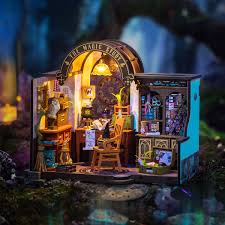
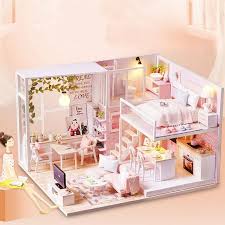
In a kit miniature house , every small object has its own reason for existence. They not only fill the space but also carry time and tell stories of life. Whether a kit miniature house impresses is not about the exquisiteness of the furniture, but about whether these furnishings can evoke resonance in the viewer, making them feel that “someone has lived here.”
1. Decoration is a clue to time
The core function of
the Kit Miniature House ‘s furnishings is to record time. Half-opened pages, the remains of a coffee cup, dust on the windowsill—these are all traces of life. These details naturally prompt the viewer to imagine: What did the homeowner just finish? When did they leave? What is their pace of life like?
For example, an unfinished envelope on the table, next to a pen, suggests someone has just finished writing a letter and perhaps hurried off.
This sense of time transforms the Kit Miniature House from a static object into a “snapshot of life.”

2. Proportion and level of furnishings
Arrangement is not only about the objects themselves, but also about their spatial relationship.
Foreground : Small, prominent objects attract the eye, such as a teacup on the table or a schoolbag on the chair.
Midground : Furniture and common items form the main body of life, such as sofas, beds, and desks.
Background : Wall paintings, curtains, and lighting give the space a sense of extension.
The sense of layering not only makes the space more realistic, but also helps the viewer visually “walk into” the cabin and slowly understand the life inside.
3. Storytelling of Objects
Every piece of furniture is part of the story.
The socks that fell by the feet suggested that the owner had just taken off his shoes;
The spice bottles in the kitchen were slightly tilted, indicating that someone had just cooked;
There was a blanket folded on the chair by the window, as if someone had just gotten up to do something else.
Through these small details, viewers can piece together their own life scenes. The kit miniature house is like a small theater, and each decoration is a character’s line.

4. The Echo of Material and Tactile Feel
The realism of a display depends not only on its shape, but also on its material and touch.
Wooden furniture: The texture that leaves traces of time makes people feel the passage of time;
Fabrics: Soft sofas or curtains enhance the sense of warmth;
Metal or ceramic: coolness or glossiness adds a layer of life.
The selection and matching of materials make the furnishings not only visually realistic, but also allow the viewer to “touch” the warmth of life in their minds.
5. Blank Space and Breathing
Furnishings don’t have to fill every inch of a space.
Leaving corners blank allows for a better sense of the homeowner’s life than overcrowding.
A kit miniature house would appear artificial if every table and corner were neatly arranged. Appropriate blank spaces leave room for viewers to fill in the story themselves; this sense of participation is the essence of a kit miniature house .
6. Conclusion: Decoration is a philosophy of life
Each object in
the Kit Miniature House symbolizes life. Through clever placement and subtle variations, the creator not only depicts space but also narrates time, emotions, and the rhythm of life. When viewers enter this miniature world, they encounter not just furniture but traces of life, the flow of emotions, and the continuation of stories .
Furnishings are the soul of the Kit Miniature House , imbuing a small space with warmth and emotion.
https://www.dguilty.com/mastering-miniature-house-kits-shaping-life-rhythm-and-time-through-furnishings/