https://www.dguilty.com/the-ultimate-guide-to-crafting-hyper-realistic-kit-miniature-houses/
a kit miniature house , the floor is more than just a support; it carries the details of life and underpins the mood and texture of the space. The material, color, and texture of the floor, as well as the design of small rugs and floor mats, all contribute significantly to the realism of the miniature space, allowing viewers to psychologically sense the depth and subtlety of life.
Floor material and sense of space
In the kit miniature house , wooden floors, stone floors, or tiles each convey a different living atmosphere:
Wooden flooring : Warm, natural, and filled with life, suitable for bedrooms and living rooms. Slight textures and color differences make the cabin more lifelike.
Stone or ceramic tile : Cool and modern, suitable for kitchens or bathrooms, adding a sense of material contrast. Small collages or cracks will make the space more realistic.
Mixed materials : Use different materials in different rooms to enhance spatial division and functional sense.
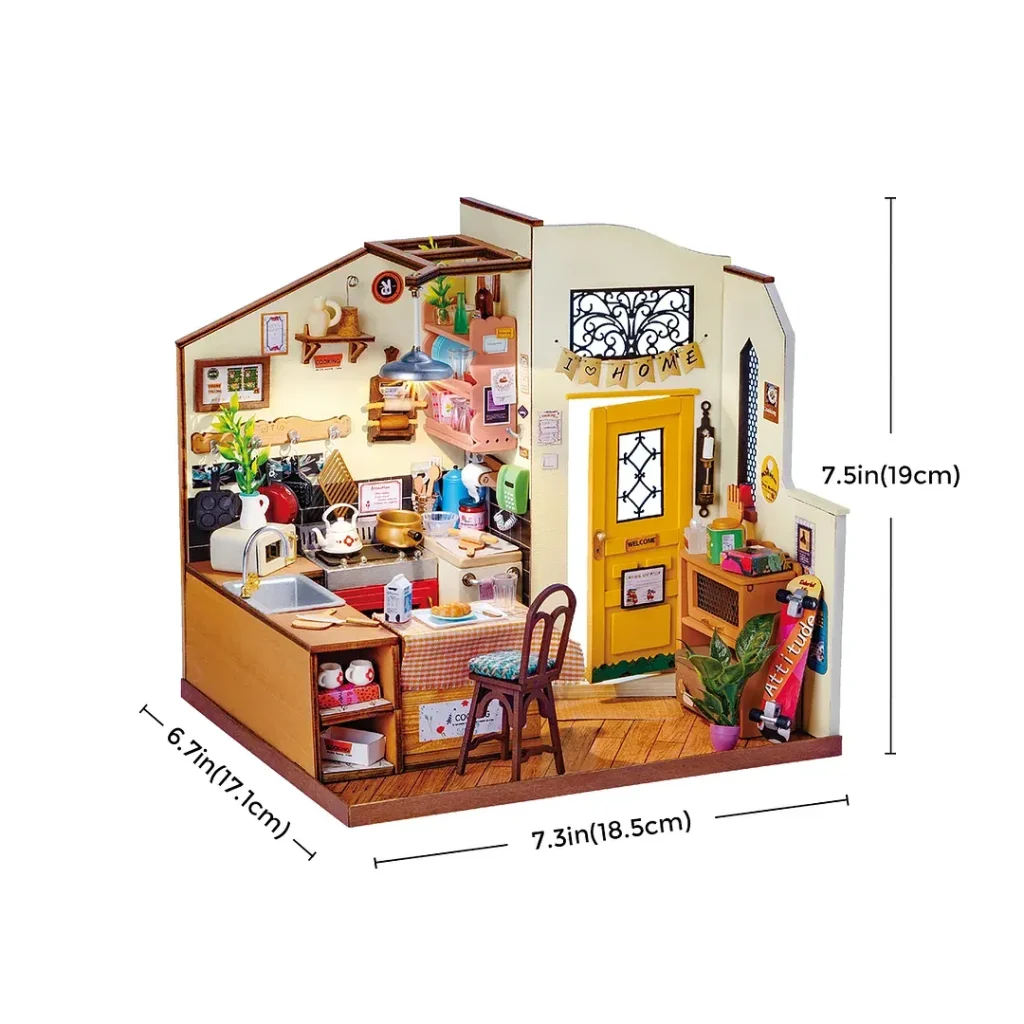
The proportions and textures of the floor are crucial. Even in a small room measuring just a few millimeters, subtle wood grain, wear, or splicing can enhance the realism of the space and allow the viewer to naturally imagine the trajectory of life.
Carpets and floor mats: Micro-temperature transfer
A small rug or floor mat isn’t just a visual decoration; it conveys warmth and a sense of life. Soft fabrics with natural weaves create a sense of comfort and intimacy, while delicate patterns can hint at the homeowner’s lifestyle and personality. Simple, geometric rugs appear rational and modern, while handwoven textures exude warmth and refinement.
The placement and shape of rugs can also guide the rhythm of a space. A small rug under the dining table, a foot mat in front of the sofa, or a tiny mat beside the bed all add a sense of layering to the space and suggest patterns of use and living habits.
Interaction of light, shadow and texture
The interplay of floor materials and light creates subtle visual layers. Light casts a shadow on the wooden floor, highlighting its texture and sheen; it obliquely casts warm shadows on the soft fabric carpet. This combination of light and texture elevates the Kit Miniature House beyond a visual presentation, evoking the feeling of living and breathing within a miniature space.

Micro-narrative of spatial stories
Floor details can convey a sense of story: a gently tilted rug suggests the homeowner has just stood up from the sofa; a book dropped to the floor lets sunlight filter through the wood grain; and the subtle color variations in the kitchen tiles suggest someone has just finished cooking. Through these subtle clues, the viewer unconsciously piece together fragments of the homeowner’s life.
Conclusion: The ground is the invisible narrator of the kit miniature house
a kit miniature house not only provides a foundation but also serves as a crucial vehicle for the spatial atmosphere, sense of life, and storytelling. The meticulous use of materials, textures, light and shadow, and finishes imbue the miniature space with a sense of reality and warmth within a few centimeters. When viewers observe the details of the floor, they almost hear footsteps and feel the warmth of life—this is the charm of a high-quality kit miniature house .
https://www.dguilty.com/the-ultimate-guide-to-crafting-hyper-realistic-kit-miniature-houses/